If you've started shopping for a new kitchen, you've likely noticed that German and European kitchen brands present themselves very differently from American cabinet companies. The difference isn't just marketing — it reflects a fundamentally different philosophy about what a kitchen is and how it should be built.
The Core Philosophical Difference
American cabinetry is typically sold as individual cabinet boxes. A 30-inch base cabinet is an independent unit. A 36-inch wall cabinet is another independent unit. Your kitchen is assembled from dozens of these separate boxes, installed side by side, with filler strips to cover gaps between units and walls.
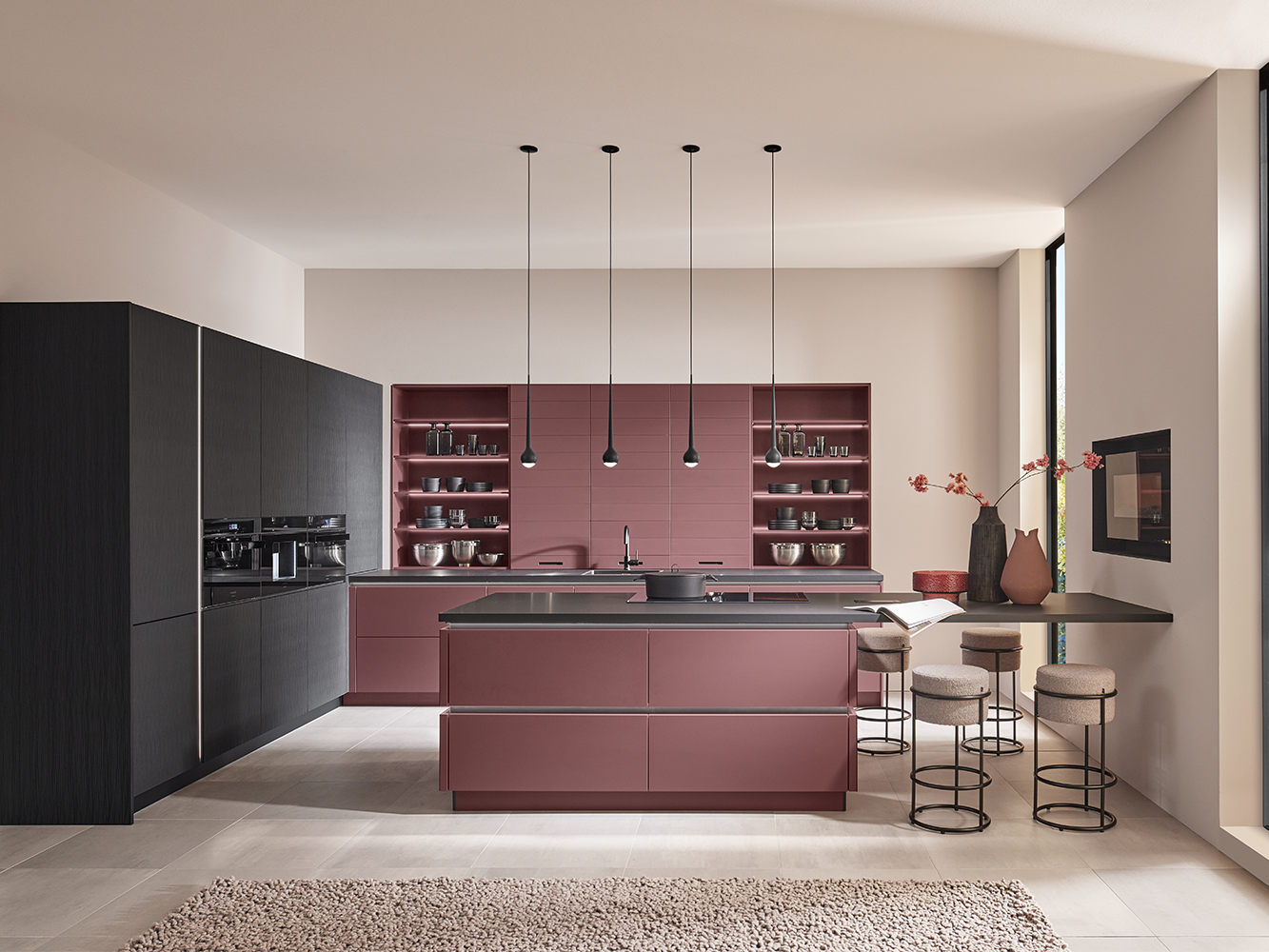
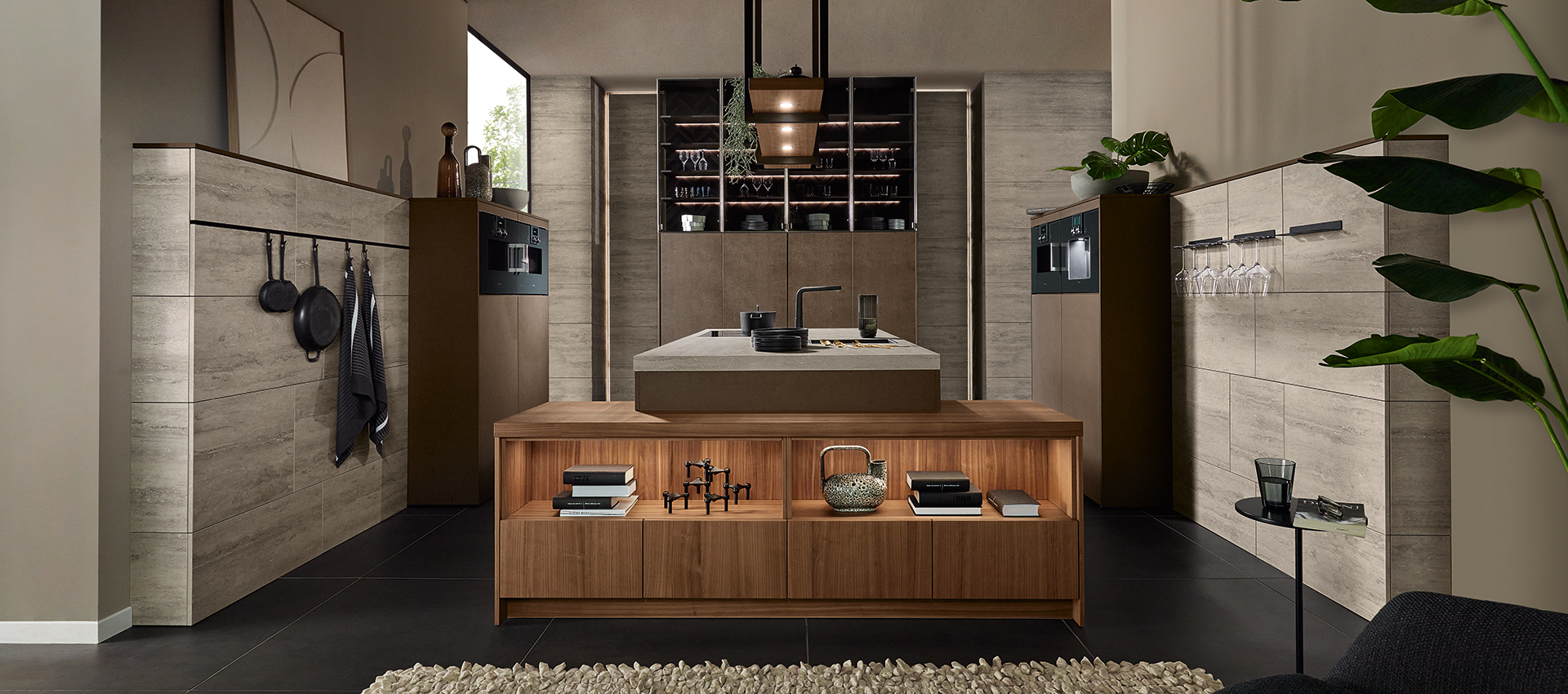
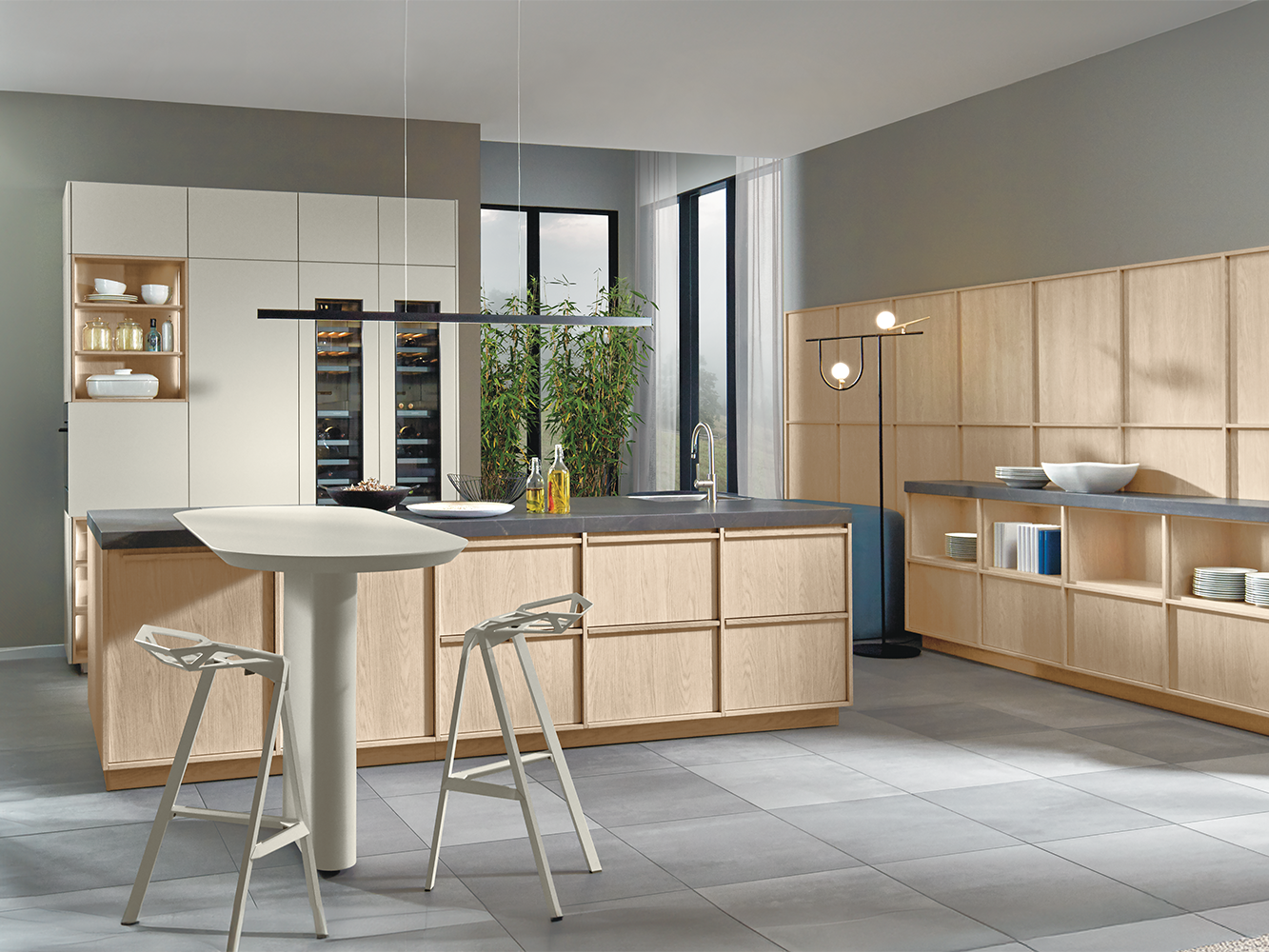
German fitted kitchens take the opposite approach. The entire kitchen is engineered as a single, integrated system. Every element — base units, tall cabinets, wall units, countertops, appliance housings, lighting, interior organizers, and even plinth profiles — is designed to work together. The kitchen is planned as one piece and manufactured to exact room specifications.
Construction Quality: What's Under the Surface
The differences become clear when you look at what's inside the cabinets:
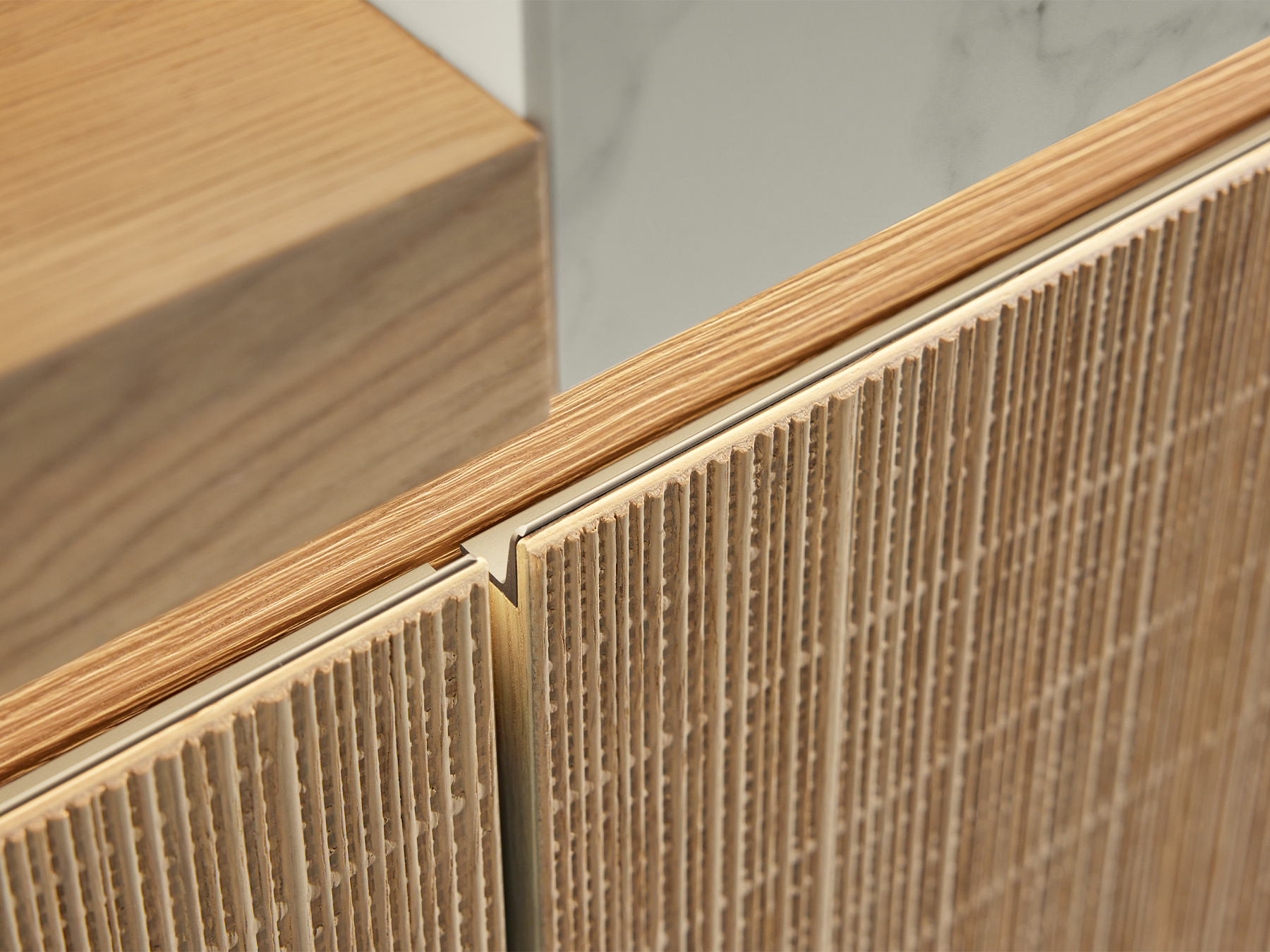
Panel construction. Pronorm uses high-density, three-layer chipboard with PUR-bonded adhesive edges throughout — base, wall, and tall units. Every panel is faced on both sides with durable melamine resin and finished with colour-matched edging. This provides measurably greater structural rigidity, moisture resistance, and longevity compared to the construction found in most American cabinetry.
Interior finishing. Open any Pronorm cabinet and the interior is finished in white, gray, or colour-matched to the front. Colour-matched edgebanding is applied to doors in almost every colour, and finished ends with white interiors are available across nearly the entire range — giving exposed cabinet sides a clean, seamless look. No raw particle board edges. No exposed substrate. Many American cabinets use unfinished or minimally finished interiors because, the reasoning goes, you won't see them. But finishing protects against moisture, extends lifespan, and represents a fundamentally different commitment to quality.
Hardware. Pronorm sources exclusively from Blum, Hettich, and Grass — the world's leading furniture fittings manufacturers. Soft-close is standard on every door and every drawer. Not an upgrade. Not an option. Standard. Many American lines charge extra for soft-close or offer it only on select models.
The Installation Difference
American cabinets are typically installed by general contractors or cabinet installers who level, shim, and screw individual boxes to the wall. Fillers bridge gaps. Trim hides imperfections. The result depends heavily on the installer's skill.
German fitted kitchens arrive as a precision-manufactured kit designed for a specific room. Adjustable legs allow precise leveling. The result is a monolithic, gap-free installation that looks built-in because, functionally, it is.
Design Flexibility
American cabinets typically come in standard 3-inch increments (30", 33", 36"). If your wall is 94 inches and cabinets come in 30" and 36" widths, you'll need fillers to make up the difference.
German manufacturers like Pronorm offer millimeter-precise sizing. If your wall is 2,388mm, your kitchen is manufactured to exactly 2,388mm. No fillers. No compromises. No gaps.
Long-Term Value
A well-built German kitchen lasts 20-30 years or more. The combination of superior materials, precision engineering, and premium hardware means the kitchen doesn't just look good on day one — it looks and functions nearly identically on day 5,000. When you amortize the cost over that lifespan, the price-per-year often undercuts lower-quality alternatives that need replacement in 10-15 years.
Is a German Kitchen Right for You?
German fitted kitchens aren't for everyone. If you're building a rental property or planning to sell in two years, American stock cabinets may be the practical choice. But if you're building or renovating your long-term home and you care about design quality, material integrity, and daily-use performance — a Pronorm kitchen represents a level of craft and engineering that American cabinetry simply doesn't match.
Ready to Experience the Difference?
The best way to understand what separates a German fitted kitchen from American cabinetry is to see and touch the materials in person. Schedule a complimentary consultation with an authorized Pronorm dealer.
Request a Consultation