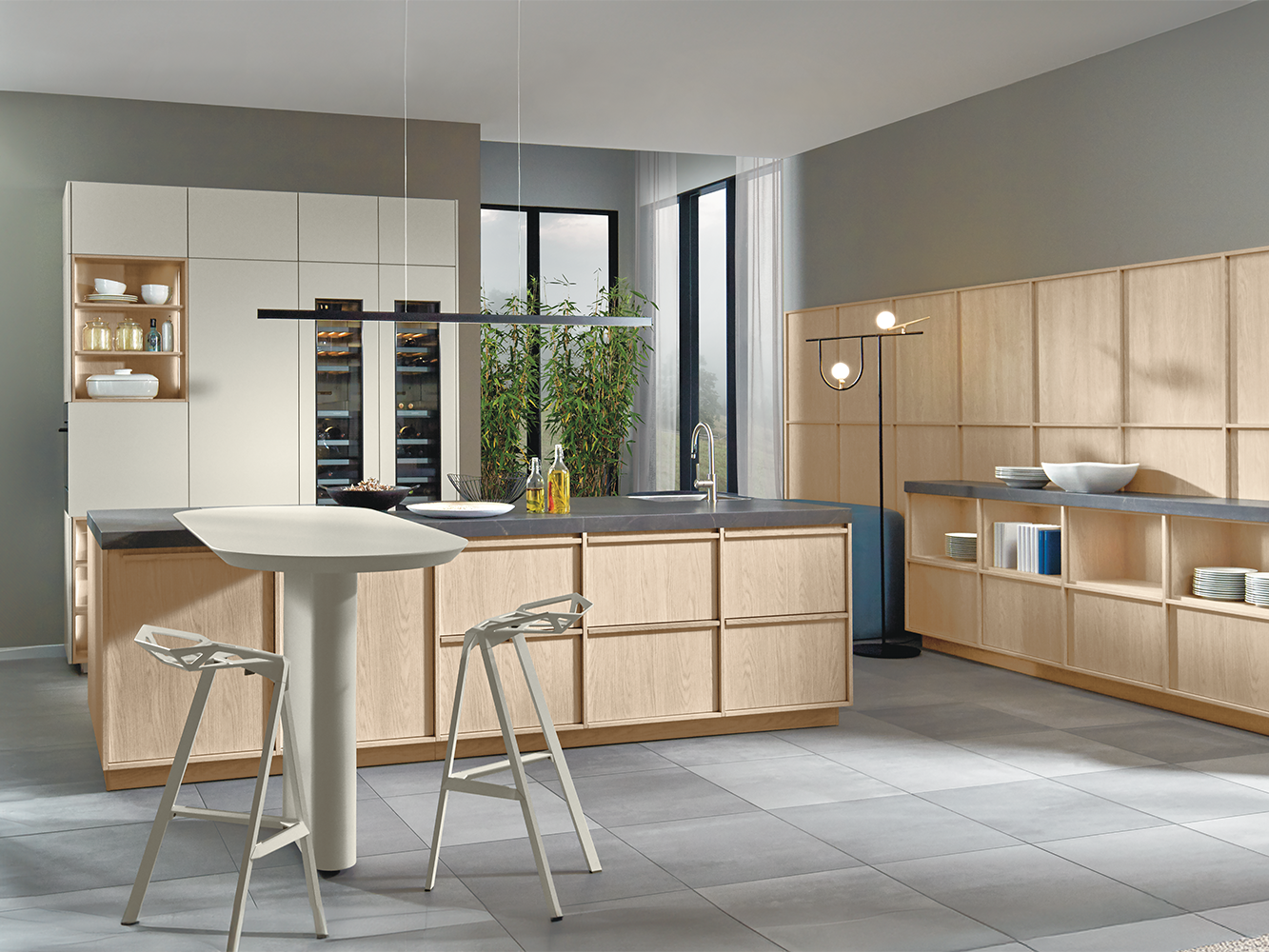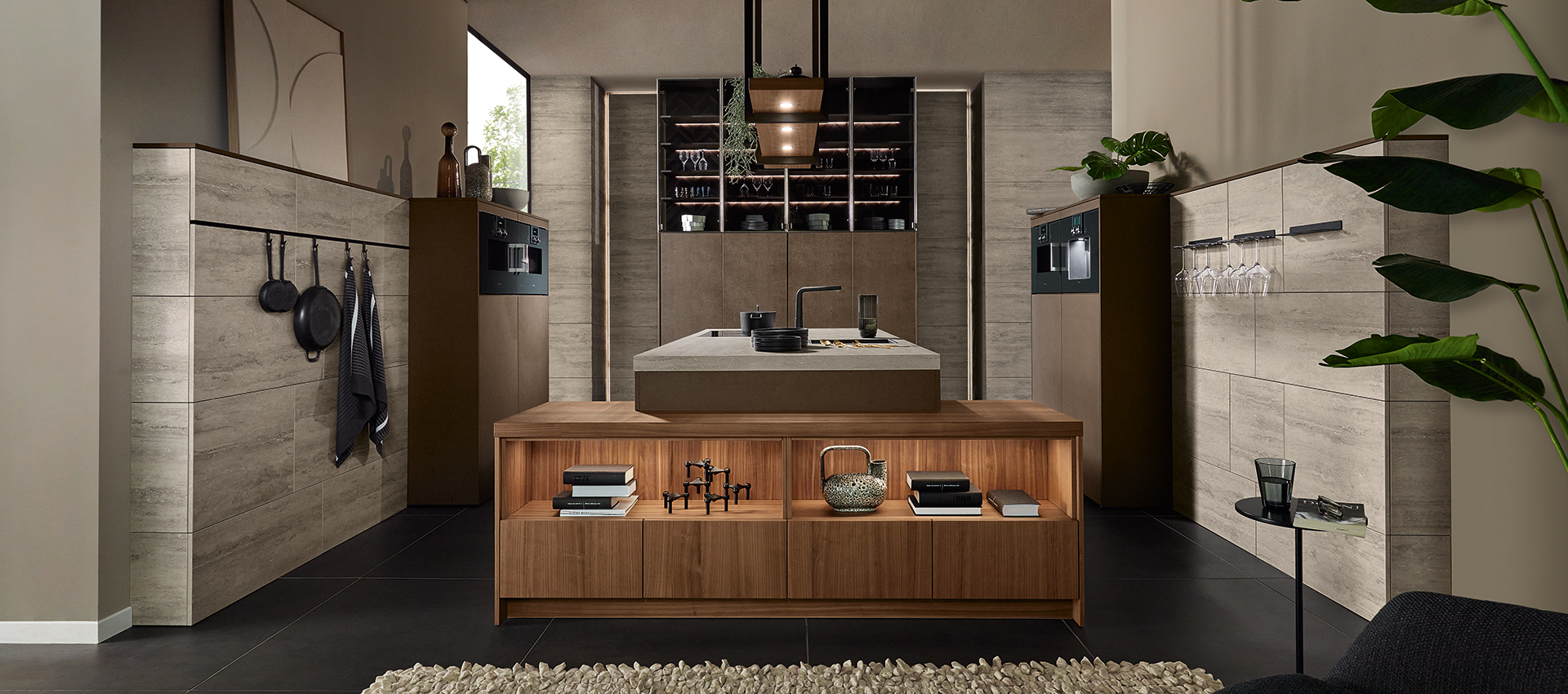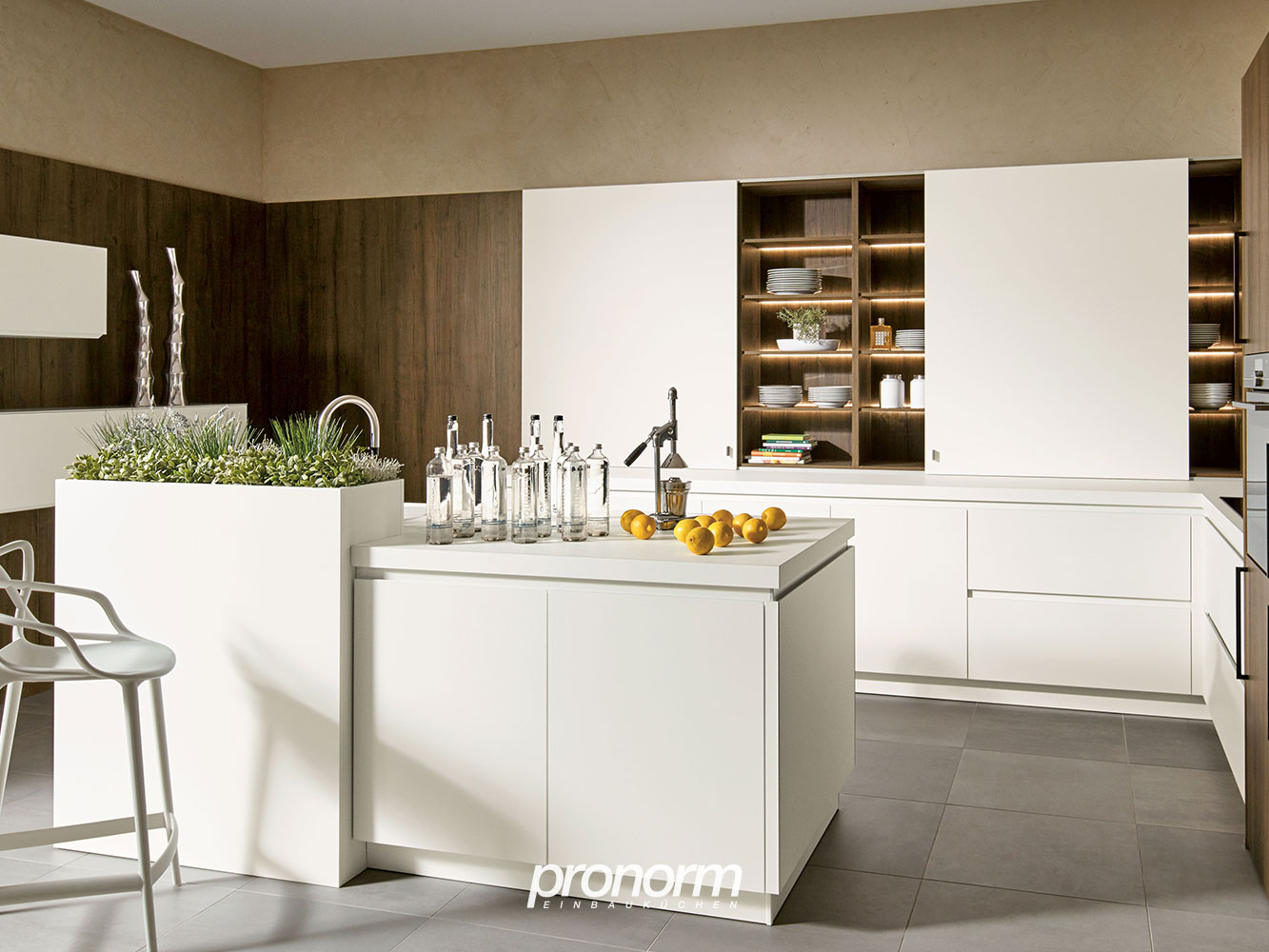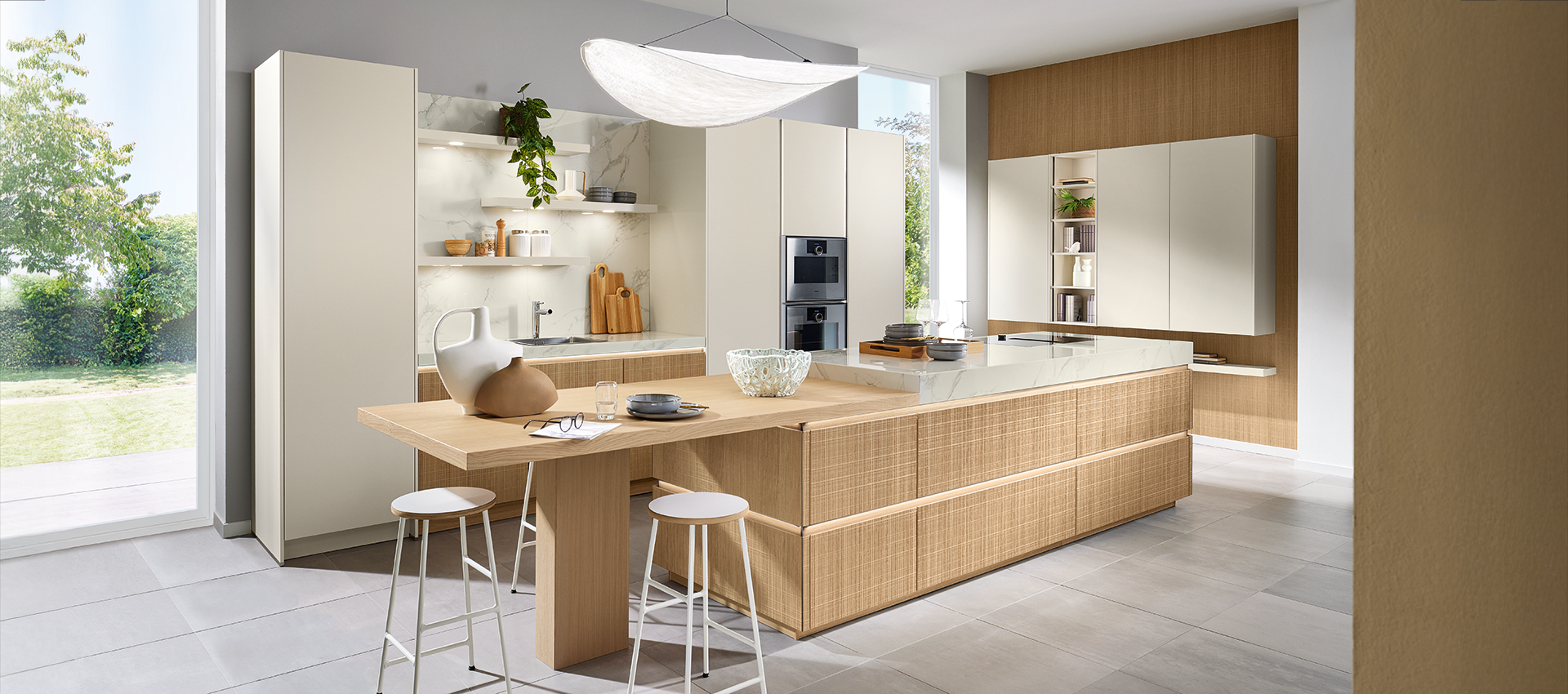
Handleless kitchens are no longer a European curiosity — they are one of the fastest-growing design trends in America. Industry data shows that frameless and handleless installations now account for roughly one-third of US kitchen projects, and that number is climbing.
The reasons are both practical and aesthetic: cleaner lines, easier maintenance, safer surfaces for families, and a sense of visual calm that transforms the busiest room in the house.
But "handleless" is not a single design — it is a category with distinct mechanisms, each with its own look and feel. This guide breaks down everything you need to know to make an informed decision, from the three main handleless systems to material choices, layout considerations, and the trends shaping kitchen design in 2026 and beyond.
The Three Main Handleless Mechanisms
1. Integrated Grip Profiles
An integrated grip profile is a recessed channel milled directly into the top edge of the door or drawer front. Your fingers slip into a clean, angled groove to open the cabinet — no protruding hardware, no visible mechanism from the front.
Pronorm's Y-line is the benchmark for this approach. The grip is not an add-on or accessory; it is structurally part of the cabinet itself. Available in stainless steel, bronze, and black anodized finishes, the Y-line grip becomes a subtle design accent — a thin line of metal that catches the light and defines each cabinet face.
2. C-Shaped Rail Profiles
A C-shaped rail runs along the top or bottom edge of the cabinet door, creating a curved lip that serves as a grip. The profile is visible from the side, adding an elegant horizontal line to the kitchen's visual rhythm.
Pronorm's X-line features a beautifully curved C-shaped profile that is both timeless and ergonomic. Where the Y-line is minimal and hidden, the X-line makes the grip a deliberate design element — a subtle curve that invites the hand.
3. Push-to-Open / Tip-On Systems
Push-to-open (or tip-on) systems eliminate visible grip profiles entirely. A gentle press on the door front activates a spring-loaded mechanism that pops the door open. The result is a completely flush, uninterrupted surface. These systems work best for upper cabinets, pantry doors, and appliance garages where a perfectly seamless look is the priority.
Why Homeowners Are Choosing Handleless
- Easier to clean: No handles means no crevices for grease, crumbs, or moisture to accumulate.
- Safer for families: No protruding hardware means no sharp edges at hip or head height.
- Visual calm and spaciousness: Removing handles eliminates visual noise, making even modest spaces feel larger.
- Perfect for open-plan layouts: Handleless cabinetry ensures the kitchen looks like furniture, not a utility room.
- Material-forward design: Without handles competing for attention, the beauty of your chosen material takes center stage.
Design Considerations
Choosing the Right Profile
- Minimalist/modern: Integrated grip profiles (Y-line) create the cleanest lines. Choose stainless or black anodized.
- Warm contemporary: The Y-line in bronze pairs beautifully with walnut, oak, and warm earth tones.
- Transitional/classic modern: C-shaped rail profiles (X-line) bridge modern and traditional sensibilities.
- Ultra-seamless: Push-to-open systems deliver a completely flush facade.
Material and Finish Options
- Matte lacquer: Resists fingerprints, creates a soft sophisticated surface.
- Real wood veneer: Walnut, oak, and ash veneers look stunning without handle interruptions.
- High-gloss: Creates dramatic reflections and luxury. Best paired with integrated grip profiles.
- Textured finishes: Concrete and stone-effect surfaces gain visual impact as unbroken planes.
Island Design
The kitchen island is where handleless design shines brightest. As a freestanding volume visible from all sides, an island with handleless cabinetry becomes a sculptural element — a monolithic block of material that anchors the room. Consider waterfall countertops paired with handleless base cabinets.
2026 Trends Shaping Handleless Design
- Warm earth tones replacing white: Walnut, tobacco, caramel, and clay tones are surging.
- Hidden storage and concealed appliances: Pocket doors, retractable shelves, and appliance garages.
- Integrated appliances: Panel-ready units sit flush with cabinetry.
- Two-tone compositions: Dark base with warm wood uppers creates depth.
- Lighting as design element: Under-cabinet and grip-integrated LED lighting.
"Will I Be Able to Open Them Easily?"
This is the most common question homeowners ask, and the answer is a confident yes. Modern handleless mechanisms are engineered for effortless daily use. Integrated grip profiles like Pronorm's Y-line provide a natural, ergonomic finger hold. C-shaped rails offer an intuitive grip. Push-to-open systems require only a light touch. Many homeowners report that handleless kitchens feel more intuitive than handled ones once the initial adjustment period passes.
Explore Handleless Design with Pronorm
Discover the Y-line and X-line collections and see how handleless design can transform your kitchen.
Request a Consultation